
How to Check Criminal History in Alleghany County
Begin by deciding which fact you need. A recent misdemeanor, traffic charge, or felony preliminary hearing belongs in the General District Court record. A felony trial, appeal, final circuit disposition, or expungement petition belongs with the Circuit Court. Current local custody is a Regional Jail question. Virginia conviction history comes from the state police SP-167 process, while a sentenced state prisoner may appear in the VADOC locator. Those sources are linked by reporting, but they are not copies of one master Alleghany County criminal record.
Names can be shared and spellings can change. Gather the full legal name, aliases, an approximate event date, the arresting agency, and a case or booking number when known. Then follow a narrow path:
- Search Virginia court information by name or case number and choose the right locality and court level.
- Compare the charge, court, offense date, and hearing date before treating a result as the right person.
- Call the District Clerk for misdemeanor or preliminary matters, or the Circuit Clerk for felony files and certified copies.
- Call Alleghany Regional Jail when the question is current local custody or booking history.
- Use SP-167 for the official Virginia conviction product, then correct any mismatch through the creating agency and VSP CARE.
Three Alleghany County Record Doors
Downtown Covington offers an easy memory aid for Alleghany County record searches. The courthouse is at 266 West Main Street. The Sheriff’s Office and Alleghany Regional Jail are next door at 268 West Main Street. Yet a few feet of distance do not make the records interchangeable. The Circuit Clerk handles felony cases, appeals, certified copies, and older circuit files. The Combined District Clerk handles misdemeanors, traffic matters, and felony preliminary hearings. Sheriff staff handle county-created reports, records requests, LIDS booking entries, and jail custody questions.
The Alleghany County government source shows the public-office setting used for local record access.
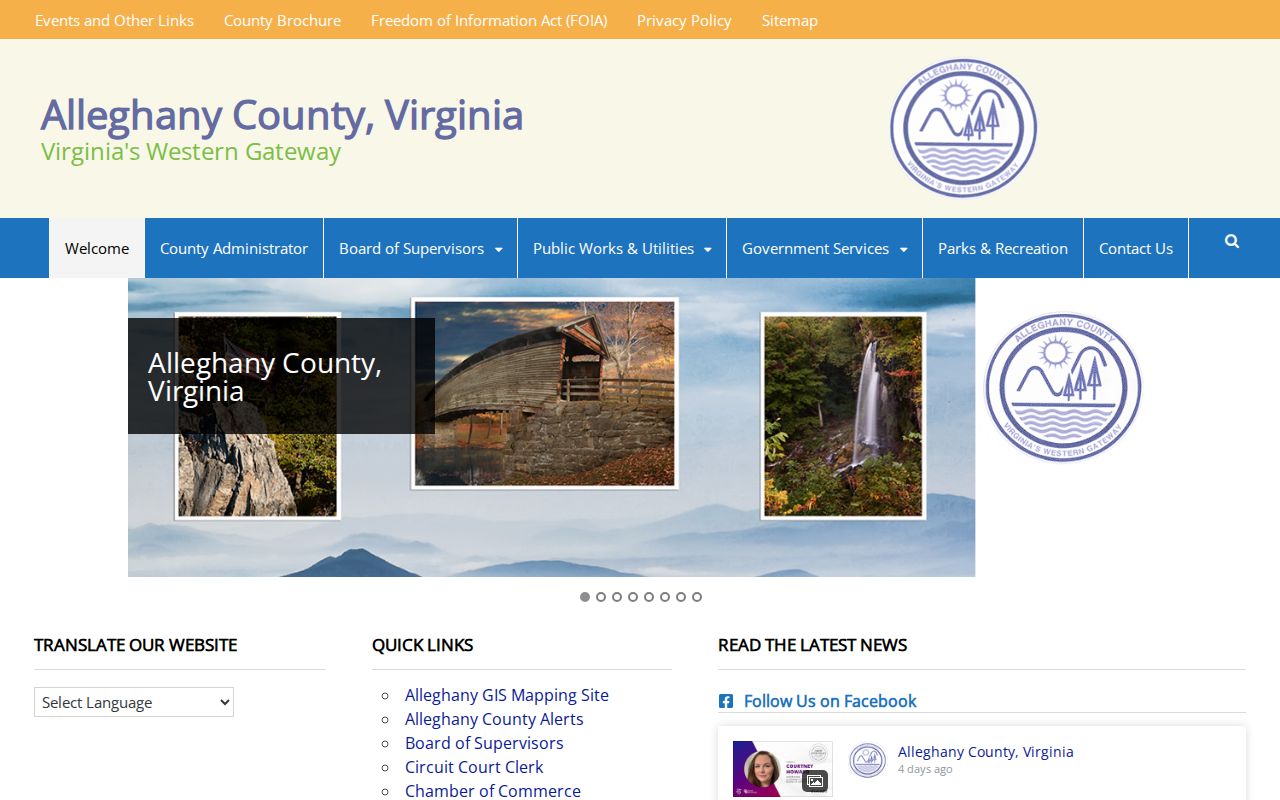
That shared civic center makes an in-person search practical, but each counter still answers a different criminal-history question. Ask the creating office for the record it controls.
Alleghany County Courts
266 West Main Street
Covington, VA 24426
District: (540) 965-1720
Circuit: (540) 965-1730
Sheriff and Regional Jail
268 West Main Street
Covington, VA 24426
Office: (540) 965-1770
Jail: (540) 965-1776
Official Virginia Background Checks
The Virginia Department of State Police Criminal Justice Information Services Division runs CARE and the Central Criminal Records Exchange function. The public SP-167 request is a Virginia conviction-data check. It is not an instant public name-results portal. The requester generates a form, the subject completes and notarizes Section 1, and a separate recipient completes and notarizes Section 2 when results go to that recipient. One printed form is used per request and mailed or delivered to CARE.
Official instructions list $15 for the criminal-history search and $20 when a Virginia Sex Offender Registry name search is included. Remote online notarization adds $25. Normal processing is about 15 business days after receipt, with no same-day or expedited option. Fingerprint-supported SP-325 checks serve authorized organizations with an established tracking number. A person reviewing a national FBI-held history instead uses the subject-only Identity History Summary process.
| Official product | Published amount | Main limit |
|---|---|---|
| SP-167 Virginia criminal history | $15 | Virginia conviction-data product |
| SP-167 plus registry name search | $20 | Generated form and notarization still required |
| Remote online notarization | $25 extra | Optional service |
| FBI Identity History Summary | $18 FBI fee | Subject-only national self-review |
Alleghany County Court and Conviction Records
OCIS 2.0 and SP-167 can return different answers without either one being wrong. OCIS is a court-case search. It can show pending adult criminal matters, hearing events, pleas, outcomes, sentence terms, and payment data from covered Virginia courts. SP-167 is a state police conviction-history product. It takes longer, requires notarized identity details, and is built from repository data rather than the public face of one court docket.
The Virginia SP-167 record-check source displays the state process and its public options.
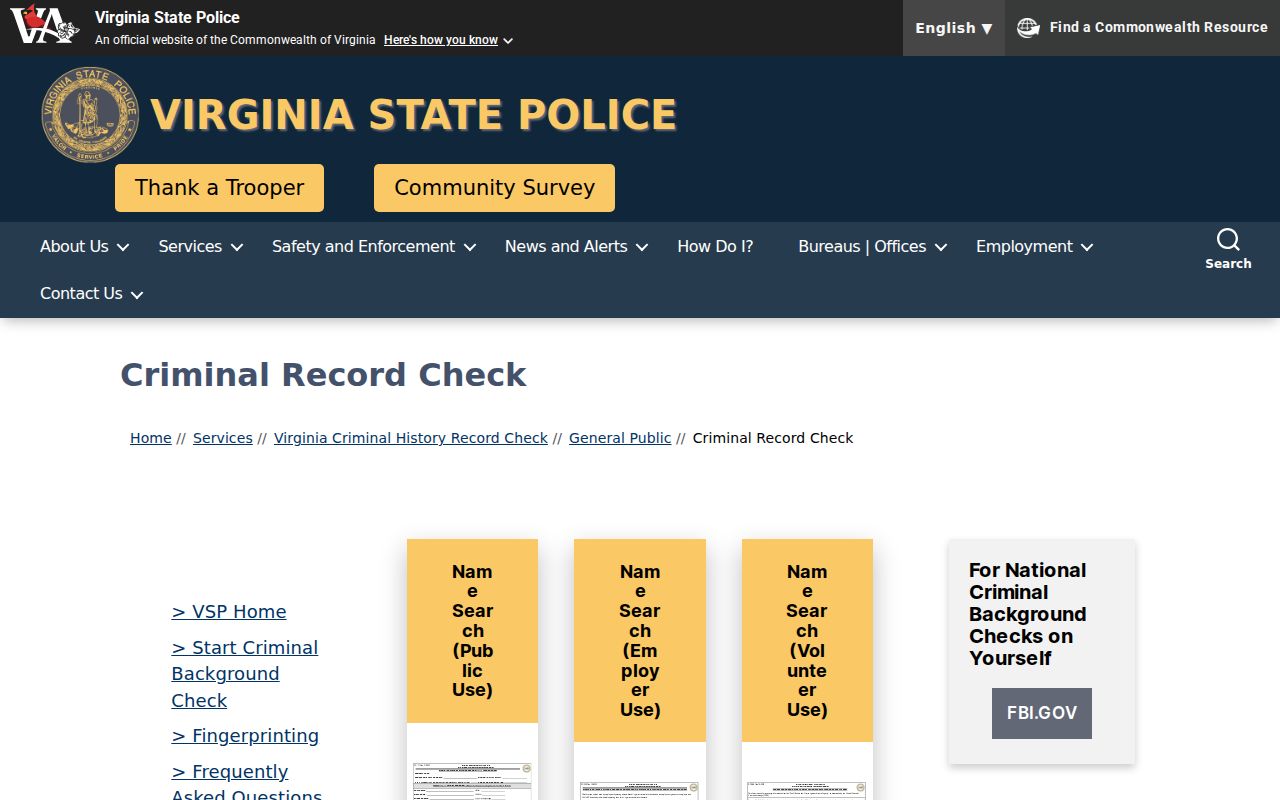
The image reinforces why a public court search should not be described as an official statewide rap sheet. For a case question, use OCIS and the clerk. For one’s own statewide conviction record, use CARE.
Alleghany County record flow: incident or arrest report → Regional Jail booking when custody occurs → district or circuit court case → disposition reported to VSP CCRE → correctional or supervision entry when ordered.
Types of Criminal Records
Each Alleghany County criminal record captures one stage of the justice process. A police incident report describes an alleged event and the agency’s response. An arrest report records the legal basis and circumstances of custody. A booking entry proves jail intake at a point in time. Neither one proves guilt. A warrant or summons is judicial process. The court case then records the filed charge, hearings, plea, disposition, sentence, fines, and costs.
State and federal systems add other slices:
- CCRE history: fingerprint-supported Virginia cycles and reported dispositions, with SP-167 providing a narrower public conviction product.
- Corrections records: local jail custody, VADOC state imprisonment, and adult state supervision have separate custodians.
- Registry records: VSP maintains offense-specific public registration data under its own statutes.
- Federal records: PACER holds federal dockets, while the Bureau of Prisons locator covers federal custody.
- Restricted records: juvenile, sealed, and expunged files are intentionally absent from ordinary public results.
The Virginia State Police forms source groups the official forms used for criminal-history and registry requests.
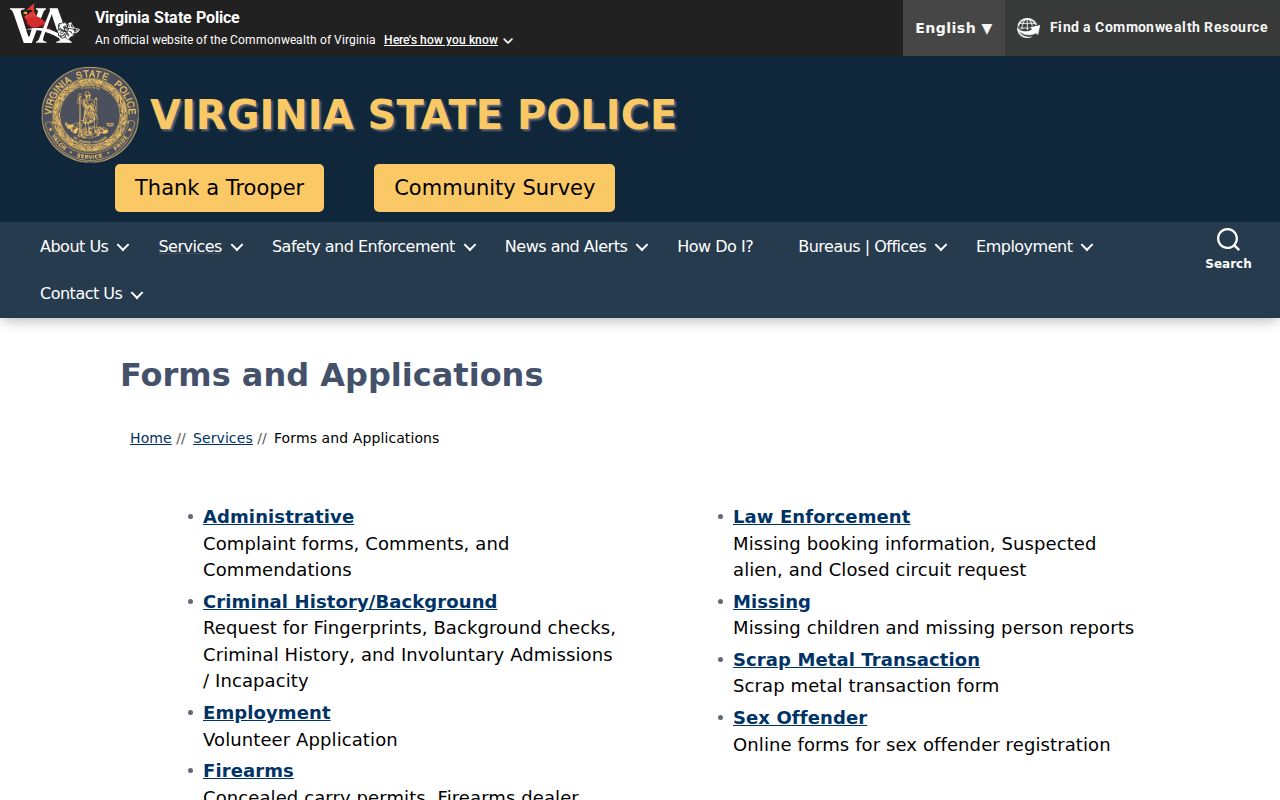
That form library helps separate a public conviction request from fingerprint-based or registry-related processes before money or documents are sent.
Alleghany County Jail Record Fallback
No official searchable Alleghany Regional Jail roster was found. The safe fallback is direct and complete. Call the jail for present local custody, allowing at least one hour after arrival for booking to finish. Contact sheriff records or LIDS staff for booking history. Search OCIS once charges reach court. Use VADOC only after a state commitment, and use VINELink for notice rather than as the definitive case file. A focused VFOIA request can seek non-online booking data subject to lawful exemptions.
The official Sheriff and Regional Jail source is the starting point for current contacts and notices.

The absence of a public roster is meaningful. It calls for the official phone, court, and records-request chain, not a commercial booking gallery. For deeper arrest and booking access, compare the creating agency’s report with the jail entry and later court file.
Warrants follow a similar path because no complete public active-warrant list exists. Call the Sheriff for county process, the District Clerk for a GDC bench warrant or capias, and the Circuit Clerk for felony process. A no-result portal search is not safe proof that a warrant has cleared.
What an Alleghany County Criminal Record Shows
The fields depend on the source. A booking record may show when the jail received a person, the delivered charges, bond, custody status, and release information. A court record adds the prosecuting charge, plea, docket events, outcome, and sentence. A fingerprint-supported repository history links arrest cycles to dispositions that agencies reported statewide. Public court views omit sensitive identity data and do not provide a downloadable full rap sheet.
| Name & Identifiers | Displayed name, aliases, date-of-birth information where allowed, and state or federal identifiers in authorized records. |
|---|---|
| Arrest / Booking Data | Arrest date and agency, booking time and number, custody status, delivered charges, bond, and release data when public. |
| Charges & Statutes | Arrest charge, later prosecuting charge, code section, offense class, and court case number. |
| Disposition | Pending, dismissed, nolle prosequi, acquitted, convicted, or another recorded outcome with its date. |
| Sentence | Jail or prison term, suspended time, fine, costs, restitution, and probation when ordered. |
| Custody / Supervision Status | Local jail, state custody, release, probation, or parole data from the office that maintains it. |
Charges often change between arrest, prosecution, and final judgment. Match both the charge and its disposition. Do not collapse several rows from the same case into several convictions.
Alleghany County Record Terms Compared
A booking, a case, and a rap sheet answer three different questions. Booking proves intake. A court case records what was filed and how the court handled it. A rap sheet connects fingerprint-supported arrest cycles to outcomes reported to the state repository. Alleghany County search errors often begin when one of these products is read as though it contains the others.
- Capias
- Court process that directs custody, often after a failure to appear or an alleged violation.
- Preliminary hearing
- A General District Court probable-cause hearing before a felony may move to Circuit Court.
- Nolle prosequi
- The Commonwealth elects not to prosecute the charge at that time; it is not the same as an acquittal.
- Disposition
- The recorded procedural outcome for a charge, such as dismissed, acquitted, or guilty.
- Suspended sentence
- Custody imposed by the court but not served while the stated conditions are met.
When an Alleghany County court entry says a felony was “certified,” follow the matter from General District Court into Circuit Court. The original arrest label may differ from the indictment and final conviction.
Public Access Laws
Virginia law separates ordinary public-record access, court-copy access, law-enforcement records, and CCRE dissemination. VFOIA can reach existing records held by the Sheriff or a police department, but it does not force an office to answer a question or create a new report. Active investigative work, juvenile information, victim details, medical data, and security-sensitive material may be withheld or redacted. Court records remain clerk products, while a statewide rap sheet follows its own dissemination rule.
Key Virginia laws:
Va. Code §2.2-3700 et seq. establishes VFOIA access to existing public records, subject to exemptions and actual costs.
Va. Code §19.2-389 controls CCRE criminal-history dissemination rather than treating a rap sheet as an ordinary FOIA file.
Va. Code §17.1-208 directs clerks to furnish court-record copies subject to law and applicable fees.
Va. Code §19.2-392.2 governs qualifying expungement petitions, with the effective version controlling during the 2026 transition.
Registry data serves public protection. It does not authorize threats, harassment, intimidation, or confrontation.
Requesting Alleghany County Criminal Records
Sheriff administration identifies staff who handle LIDS inmate entry, incident-based reporting, FOIA requests, and monthly reports. Start with (540) 965-1770 and describe the exact record: incident report, arrest report, booking history, warrant information, CAD or 911 material, or body-camera footage. Include the incident or booking number when known, a tight date range, location, involved agency, and preferred format. The Sheriff cannot supply a Covington or Clifton Forge report merely because a person later entered the Regional Jail.
The Sheriff administration source identifies the local records, reporting, and FOIA roles.
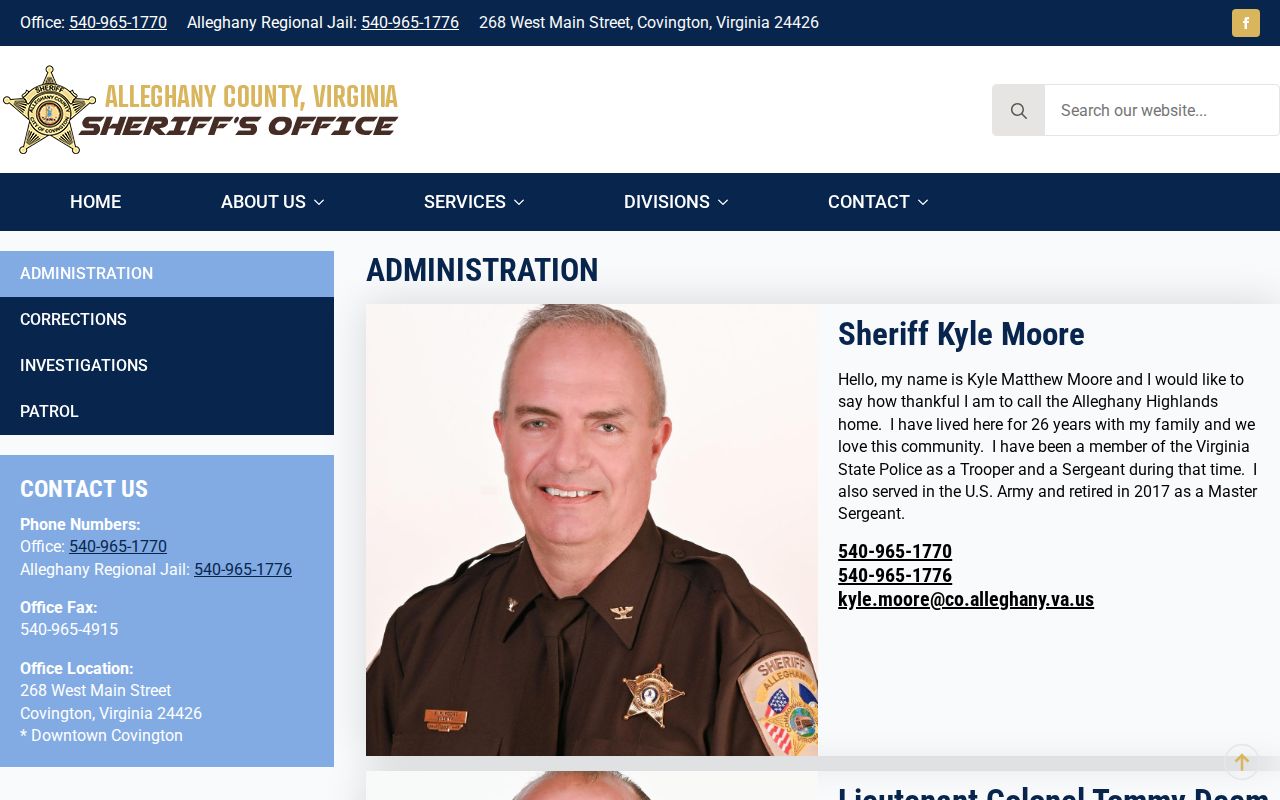
This staff structure explains why a request should name the record and its creator, not just ask for “a background check.” No sheriff-specific public copy-fee schedule was located. Virginia permits reasonable actual costs and an advance payment when an estimate exceeds $200, so ask for an estimate and electronic delivery before broad work begins.
VFOIA’s ordinary response window is five working days. An office may produce, cite a lawful withholding, release redacted parts, say the record cannot be found, or invoke seven more working days when production is not practical in the first period.
Sealed, Expunged & Restricted
Juvenile court information is confidential, and the Virginia Judiciary excludes juvenile J&DR cases from public online results. Some adult criminal matters heard in J&DR may still appear. Other gaps can result from an older paper file, a participating court’s online limits, a case not yet disposed, late reporting, or a sealing update. A blank search result is not proof that no Alleghany County criminal record ever existed.
Virginia expungement under §19.2-392.2 traditionally reaches specified acquittals, dismissals or nolle prosequi outcomes, mistaken identity, and defined pardon or writ situations. A qualifying Alleghany matter is filed in Circuit Court at 266 West Main Street. The petition identifies the charge, disposition, arrest date and agency when known, the name used, date of birth, and supporting charging paper when reasonably available. Mistaken-identity claims require fingerprints. The Commonwealth is a party, and CCRE sends history to the court under seal.
Sealing under Chapter 23.2 is a separate mechanism. It can limit public access through automatic or petition paths while preserving access allowed by law. Expanded rules phase in during 2026, so use the version effective on the filing date and ask the Circuit Clerk about current forms and costs. After an order is processed, a person can recheck the court portal and obtain a CARE record to spot a lag or mismatch.
Historic Alleghany County Criminal Records
Alleghany County was formed in 1822, long before an online docket could capture its full court history. The Library of Virginia microfilm inventory reaches records that current portals do not, including process books, jail reports and accounts from 1892 through 1913, assorted jail papers, and older local court material. That makes the state archive a sound fallback for genealogy, historic case research, and institutional history rather than a substitute for a current custody or warrant check.
The Library of Virginia Alleghany inventory identifies the surviving criminal-justice and court materials.
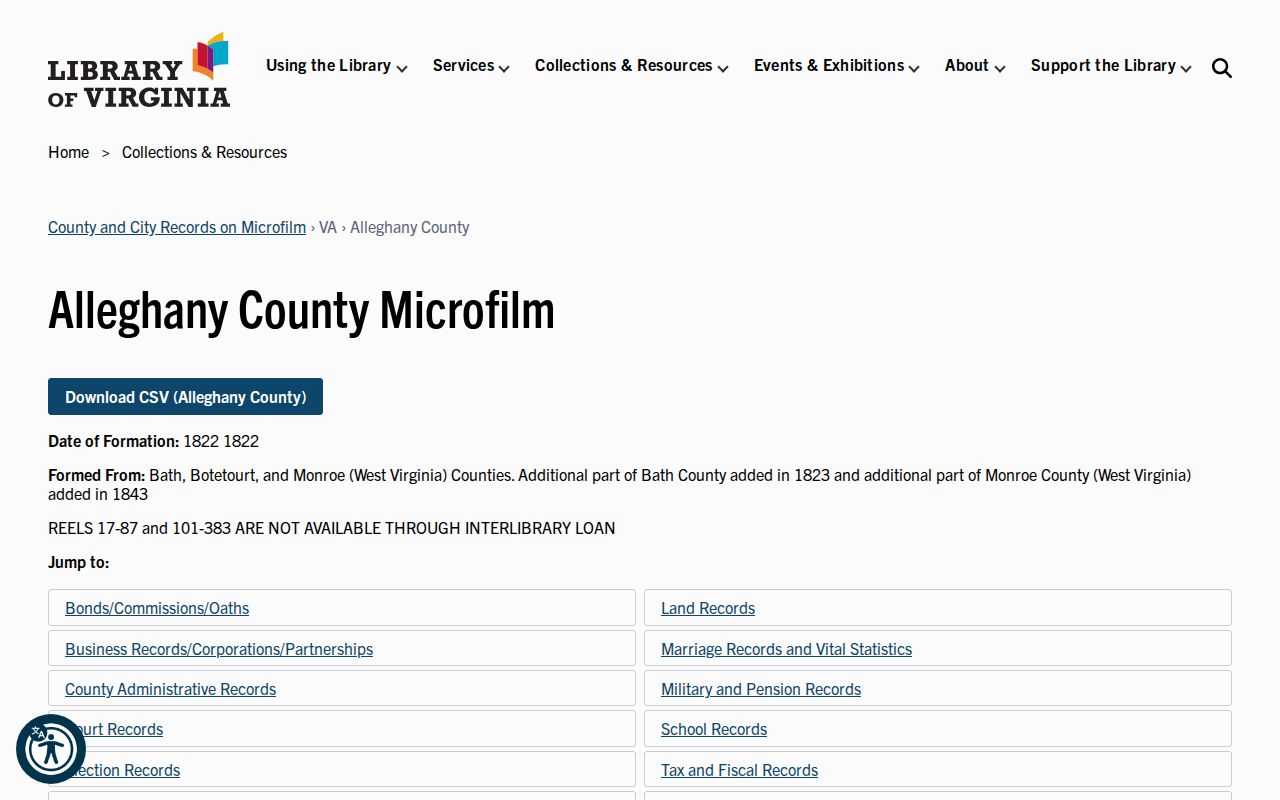
The collection shows why older Alleghany County criminal records may require an archive and a clerk instead of a name query in OCIS. Start with a date, court, party name, and record series whenever possible.
Alleghany County Supervision Records
Adult probation and parole supervision is state-run through VADOC, not a county probation portal. The court case shows the sentence and probation order. VADOC maintains the supervision file. A person checking their own status or officer assignment should confirm the current field office through VADOC because district organization can change. Public case and inmate-locator fields do not expose a complete supervision file for another person.
The VADOC probation and parole source explains the state supervision structure.
The distinction matters because most Virginia felonies committed on or after January 1, 1995 do not carry traditional discretionary parole, though legacy and special-eligibility groups remain. A supervision violation may create an officer report, capias, hearing, and new court docket entry.
Alleghany and Covington also share an Adult Recovery Court at the Circuit Court. Its Tuesday specialty docket can create case events for eligible participants, but the program is not a separate criminal-record database.
Alleghany County Custody Record Paths
Custody searches should follow the person’s status. Alleghany Regional Jail holds local pretrial and short-term custody data. The VADOC Inmate Locator covers sentenced state prisoners, not the local pretrial population. Federal custody is separate again, with Bureau of Prisons data and federal court dockets outside Virginia OCIS. Moving from one system to the next before the transfer or commitment is recorded can produce a temporary no-result.
The VADOC Inmate Locator is the state-prison search channel. For a current Alleghany County booking, call the Regional Jail first. Move to VADOC only after sentencing and state commitment. Use court files to verify why custody occurred and how the case ended.
Criminal Records by City in Alleghany County
Local geography changes the correct search filter. Covington is the county seat and hosts the courthouse, Sheriff, and Regional Jail, but Virginia treats it as an independent city. Its police reports and city FOIA requests remain with Covington. Clifton Forge is an incorporated town with its own police department, while its custodial arrests move to the Regional Jail and its criminal cases use the Alleghany court system. Iron Gate has no distinct police or municipal criminal-court system documented well enough for a separate city page.
Covington Criminal History
Independent city and county seat, with city police records and separate locality filters.
Clifton Forge Criminal History
Town police records route through CFPD, with bookings and cases moving into county institutions.
Search Covington and Alleghany separately when the location is uncertain. A city police report, county jail booking, and court disposition may belong to three custodians even when they stem from the same event.